

- The Heart of Star Wars: the Central Themes
- The Original Trilogy: Setting Up the Redemption Arc
- The Prequels: Good Story, Questionable Execution(dialogue🤣)
- The Sequel Trilogy: Death by Committee
- The Fundamental Deviation
- The Character Assassination Continues
- How It Could Have Been Better
- The Bitter(oh so Bitter) End
- Star Wars Episode IX: Legacy of the Force – A Rewrite
I grew up in the 80s, and it’s a massive understatement to say Star Wars had a huge impact on my childhood.
And I have opinions about it. 🤣 So, this will be long, but let’s get into it.
It’s been… a very long week, personally, politically, etc.
I’ve had this thought about the sequel trilogy rolling around in my head for a few years now. I need to get my head out of reality, so it’s time to write this down. 🤘🤘
I want to make a case here, an argument about why the sequel trilogy isn’t just disappointing, but actually deviates from and contradicts the story Star Wars told in the first place.
A sequel should supplement the story in some way, and most of the extended Disney canon does this in some way, but this is regressive AF.
So let’s deconstruct what Star Wars was really about.
The Heart of Star Wars: the Central Themes
The Star Wars saga is not, at it’s core, about the rebellion versus the empire, or even good versus evil. Sure, those important elements are there, but they’re just the backdrop, or context.
The first six movies tell a story that’s almost Shakespearean in scope: the rise, fall, and redemption of Anakin Skywalker.
Everything else… the Death Stars, the space battles, the lightsaber duels… they’re all just context for this deeply personal story about bringing a man back from darkness.
Think about it this way: in a regular “good vs. evil” story, Darth Vader would just be the bad guy who gets defeated in the end. But that’s not what happens at all. Instead, the original trilogy builds to this incredible moment where love and compassion triumph over power and hatred. It’s not about defeating the bad guy, it’s about saving him.
The Original Trilogy: Setting Up the Redemption Arc
Let’s break this down piece by piece (because this is important, I promise).
A New Hope introduces Vader as this terrifying figure in black armor who seems to be evil incarnate. He’s the Empire’s enforcer, a symbol of everything the rebels are fighting against. But even here, Obi-Wan’s cryptic comments about Vader’s past hint at something deeper.
Then Empire drops the mother of all plot twists, “No, I am your father”, and suddenly everything shifts(I’m old enough to remember people questioning the veracity of Vader’s claim, and that he might just be fucking with Luke).
This isn’t just about good guys versus bad guys anymore. It’s about a son trying to save his father.
Return of the Jedi brings it all home. The movie builds to this moment where Luke refuses to kill his father, choosing compassion over victory. And it works! Anakin Skywalker returns from the dark side, sacrifices himself to save his son, and brings balance to the Force. It’s beautiful, it’s powerful, and it gives meaning to everything that came before.
This isn’t just good storytelling: it’s mythic storytelling. It’s about redemption, sacrifice, and the power of love over hate. That’s what Star Wars was really about.
The Prequels: Good Story, Questionable Execution(dialogue🤣)
I know what you’re thinking, “But the prequels were terrible!”
I agree and disagree. I’m not here to argue they weren’t flawed. They were, but there are redeemable qualities and they enhanced the story and theme.
They showed us how Anakin fell to the dark side and it’s an interesting exploration.
This talented kid who just wants to protect the people he loves ends up becoming the galaxy’s Worst Dude because he can’t let go of his fears. How he was perpetually gaslit by Palpatine to exacerbate those insecurities.
The tragedy of Anakin Skywalker is that everything he does, he does out of love, but his fear of loss corrupts that love into something dark and possessive.
The problem? (And this is where it gets interesting.) George Lucas had too much power and not enough people willing to tell him “no.”
After the success of the original trilogy, everyone treated him like he could do no wrong.
Need proof?
For one, a lot of these things are highlighted in the documentary “The People vs. George Lucas”.
He’s beyond a certain level of criticism now; he’s beyond the idea of true collaboration.
Gary Kurtz, the producer of the original Star Wars and The Empire Strikes Back
he only reason it’s fun is because I don’t have to answer to anybody. I don’t have anybody telling me what to do—that’s what I’ve earned.
George Lucas himself
Look at the dialogue. Empire and Jedi had different screenwriters, but Lucas wrote the prequels himself, and… well… I think we all remember how well those romantic scenes between Anakin and Padmé went over. Portman couldn’t deliver those lines to save her life, and I think, at this point, it’s indisputable that she’s a great actor.
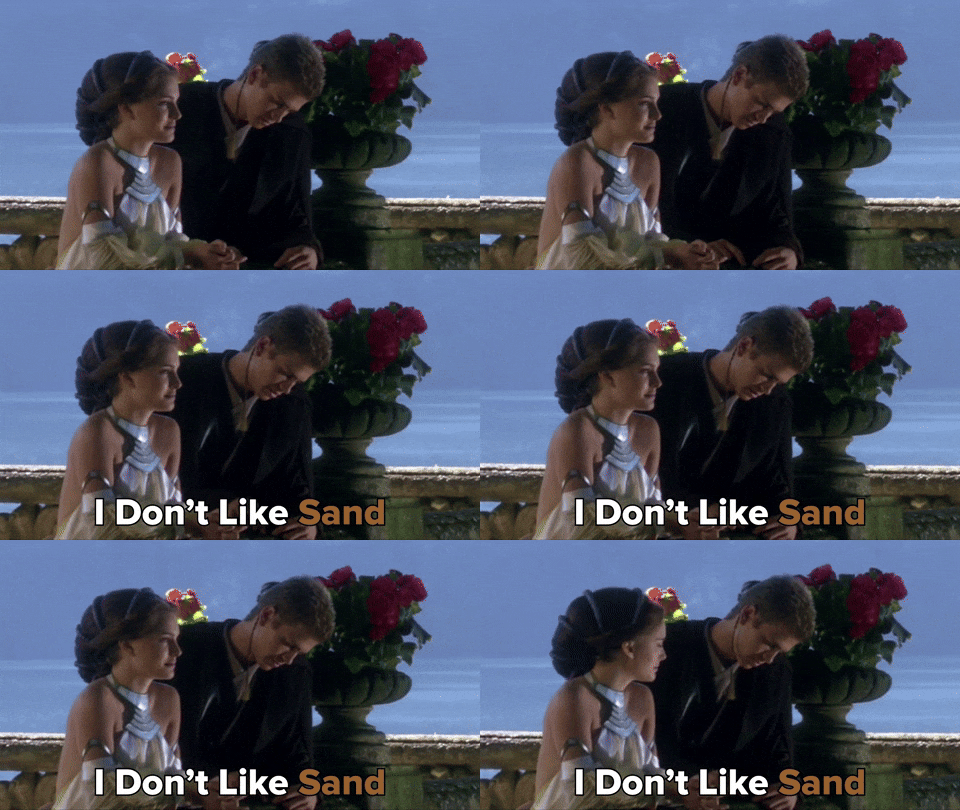
Even Hayden Christensen has proven he can play the role, as he’s been doing great in these Disney spinoff shows like Ashoka and Obi-Wan.
But here’s the crucial thing: even with their flaws, the prequels understood what story they were telling. They were about Anakin’s fall, setting up his eventual redemption.
Watching Anakin fall, why, and to what extent accentuated the Original Trilogy storytelling. I maintain Rogue One massively added a lot too.
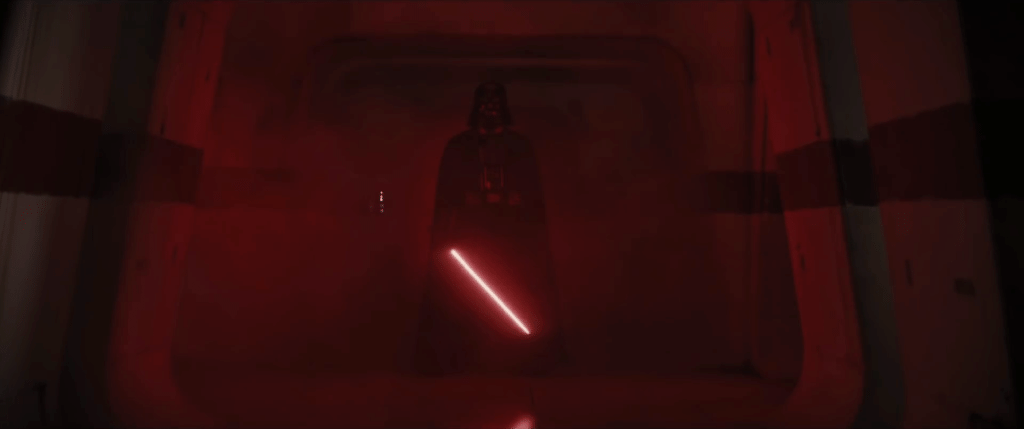
Every major plot point served that larger narrative.
The execution was shaky, but the backbone was solid.
The Sequel Trilogy: Death by Committee
Disney buys Star Wars, and they’re so afraid of pulling a Lucas (you know, having one person with too much creative control) that they swing completely in the opposite direction. Instead of one person with too much power, we have too many people with competing visions.
The Force Awakens plays it super safe.
It’s basically A New Hope with a fresh coat of paint. They gave us an even biggerer Death Star! Because apparently, if one Death Star is scary, a planet-sized one must be scarier? (Spoiler alert: it’s not. It’s just less creative.) I wasn’t a fan of this mechanic in RofJ but ya know
Then The Last Jedi comes along and tries to do something different (which, credit where it’s due, at least it took some risks!). It suggests that maybe heroism isn’t about family lineage. Maybe Rey doesn’t need to be from some special bloodline to be important. That’s actually an interesting theme to explore!
Rise of Skywalker comes swooping in like a panic-stricken executive and tries to undo everything The Last Jedi did while simultaneously wrapping up a trilogy that had no coherent plan. Suddenly Rey has to be a Palpatine, which is the MFing cringiest thing I can imagine.
The Fundamental Deviation
None of this enhances Anakin’s story, which is the core theme.
In fact: they completely undermine Anakin’s redemption arc. Everything in the first six movies built up to that moment when Anakin chooses his son over the Emperor and brings balance to the Force.
And what do the sequels do? They bring Palpatine back! “Somehow, Palpatine returned.” 🙄🤦♂️
This isn’t just bad writing: it’s a fundamental misunderstanding of what Star Wars was about. By bringing Palpatine back, they’re essentially saying that Anakin’s sacrifice meant nothing.
All that character development, all that emotional weight… poof! Gone.
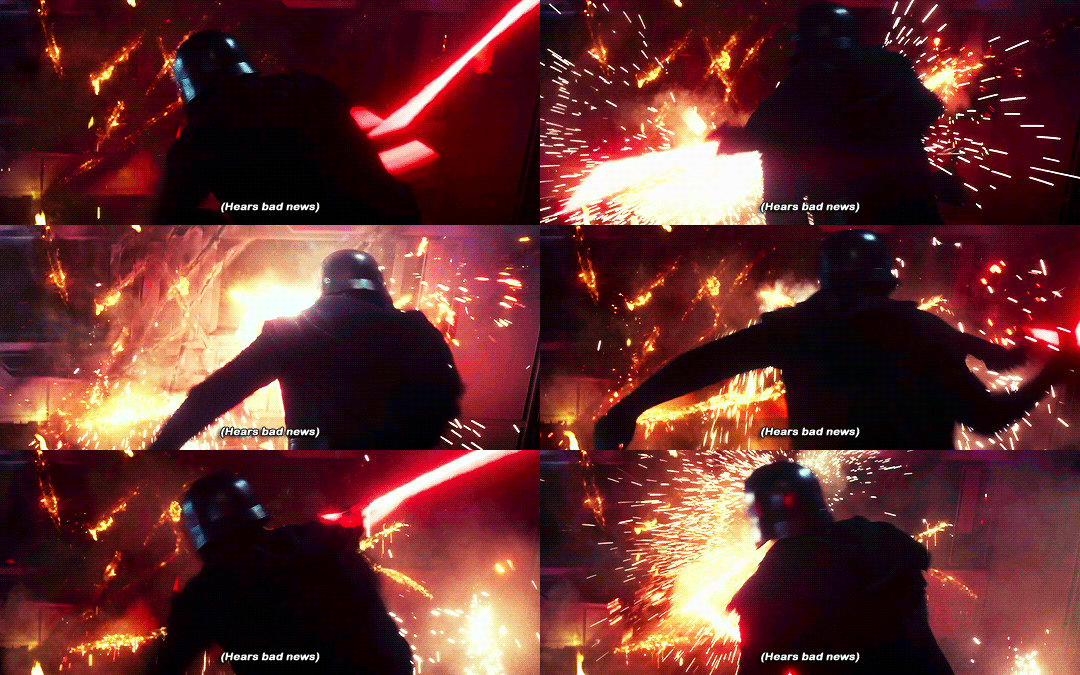
But it gets worse. The sequels try to make Kylo Ren into an even more tortured version of Vader(out Vader Vader), but they miss what made Vader compelling in the first place. Kylo’s obsession with Vader completely ignores the redemption part of Anakin’s story. He’s cosplaying as Vader without understanding who Vader really was.
The Character Assassination Continues
And let’s talk about how they handled Luke and Leia, the living legacy of Anakin’s redemption. In the original trilogy, Luke’s belief in his father’s goodness is what saves the galaxy. His compassion and hope are vindicated.
But in the sequels? Luke becomes a bitter old man who considers murdering his nephew because of a bad dream. (Yes, I know it was just a moment of weakness, but, I mean)
This is the same guy who saw good in Darth Vader! The sequels took the character whose defining trait was his hope and optimism and turned him into a cynical hermit who gave up on everything he once believed in.
How It Could Have Been Better
I can’t imagine the pressure they were under making these movies. But imagine if they’d actually embraced what Star Wars was really about, legacy, redemption, and the impact our choices have on future generations. Not peripherally, but really made that the core.
They could have explored how Anakin’s redemption affected the galaxy. The way it’s presented, it didn’t matter at all.
Maybe show how Luke and Leia dealt with being the children of both a hero and a villain. Hell, they could have made Kylo Ren’s obsession with Vader actually mean something by showing him struggling with the full truth of his grandfather’s legacy, not just the “cool dark side” parts.
Instead of bringing back Palpatine (still can’t believe they did that), they could have explored new threats that arose from the power vacuum left by the Empire’s fall. Show us how the next generation deals with the consequences of the past while forging their own path.
The Bitter(oh so Bitter) End
When I left the theater after The Last Jedi, I remember thinking, “Well, this is different, but maybe they can pull it all together in the final movie.” I kept thinking of ways it could be pulled together to tie it all in and for it to make sense.
The Last Jedi wasn’t a bad movie, isolated from its context, though I didn’t like a lot of the plot decisions(the whole portrait of Luke was all wrong, IMO).
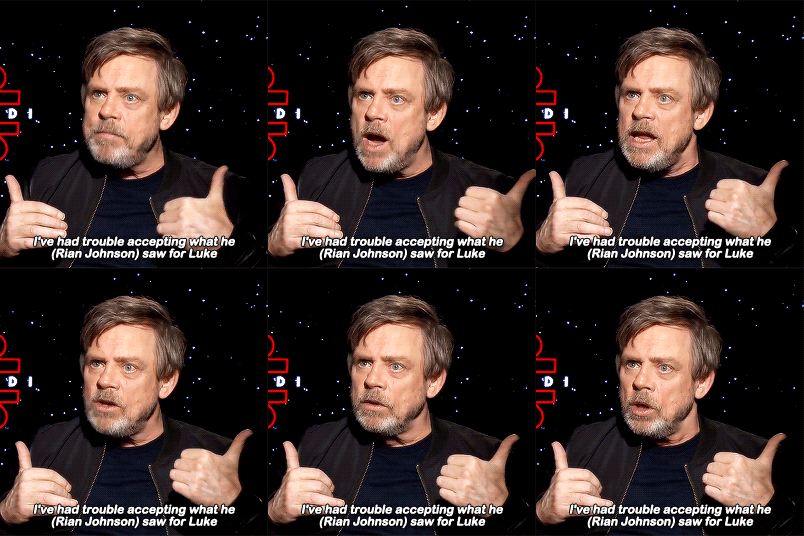
And The Last Jedi was gorgeous.
But then: Rise of Skywalker felt like it was written by an algorithm trying to please everyone while actually pleasing no one. It was the opposite of anything that thematically made sense.
It’s like they took everything that made Star Wars what it is and replaced it with a checklist of focus-group-approved “Star Wars moments.”
And that’s why I say these sequels can’t be redeemed.
It’s not just that they’re categorically bad movies. Some of it is fun and worthwhile. I like the characters. I think Rey is great. I like the character of Kylo Ren. I love all the characters and actors, really.
But, they ignored what made the Star Wars trilogies important in the first place.
They traded the deeply personal story of redemption for a corporate-approved greatest hits compilation.
The original trilogy was about a son’s love redeeming his father.
The prequels, for all their faults, were about that father’s tragic fall.
The sequels? They’re about… well, I’m still not sure what they’re about. I could speculate but who cares? It’s entirely other, and it’s a mess.
I still love Star Wars. The original trilogy still holds up. The prequels, for all their faults, at least understood what story they were trying to tell. I love the Filoni-verse(why didn’t he just write the sequels? IMHO).
But the sequels? What even
And maybe that’s the real tragedy here: in trying so hard not to repeat George Lucas’s mistakes, Disney ended up making entirely new ones that are worse.
Way worse.
WAY WAY worse.
At least Lucas’s prequels had a heart, and made sense in their context, even if the execution was… let’s say “questionable.”
The sequels feel like they were made by a committee, and it shows. Mostly because, they were made by a committee.
The thing about Star Wars is that it was never just about cool lightsaber fights and space battles (though those are awesome). It was about the human heart, about falling down and being lifted up by love.
The sequels might have given us bigger explosions and fancier effects, but they forgot to give us a reason to care.
And that’s something no amount of retcons or spinoffs can fix.
It needs to be ignored and replaced, unfortunately. They obviously keep trying to fix it in the expanded universe(it was alluded to in the last season of The Bad Batch for example).
Star Wars Episode IX: Legacy of the Force – A Rewrite
I’m nobody. But even I can kinda make this work.
Before I dive into this, let me be clear: this isn’t about fixing plot holes or making a “better” movie. This is about crafting a story that keeps the sequel trilogy in line with the themes of the first six movies, which I think results in a more satisfying conclusion, one I could live with, even with flawed execution.
Bear in mind, I still don’t like the directions Episodes 7 & 8, but when I left Last Jedi, I could see a few paths forward that could have brought it all together in a way that made sense.
I’m not attempting to fix all plot holes, etc, it’s just a basic idea to show that it could have been done.
The Basic Setup
We’re following the events of The Last Jedi.
The Resistance is in shambles, Luke has become one with the Force, and Kylo Ren is Supreme Leader.
But here’s where we pivot…
The story opens with Kylo Ren obsessively studying Vader’s mask (like we’ve seen before), but this time he’s troubled. He keeps having Force visions, not just of Vader’s darkness, but of Anakin’s redemption. He sees fragments of that final moment when Anakin chose love over power, and it’s driving him crazy. Because here’s the thing: Kylo’s been worshiping a sanitized version of his grandfather’s legacy, focusing only on the power of Vader while ignoring the redemption of Anakin.
The Core Conflict
The real threat isn’t some resurrected emperor or a fleet of super-weapons. It’s the legacy of the Empire itself, specifically, a coalition of former Imperial worlds and sympathizers who believe the galaxy needs “order” more than freedom(unfortunately, as I sit here and type this, Trump just won re-election so…).
They’ve been gathering strength in the Unknown Regions, led by a charismatic former Imperial officer (think a younger, more idealistic version of Grand Admiral Thrawn) who believes the Empire’s mistake wasn’t its goals, but its methods.
This Imperial Remnant has been studying Force artifacts and ancient Sith teachings (because of course they have), and they’ve discovered something interesting: a way to use the Force to influence events on a massive scale.
Not through superweapons, but through something more insidious: the ability to manipulate fear and hatred across entire systems.
Rey’s Journey
Rey is struggling with her own legacy, or lack thereof. She’s studying the ancient Jedi texts, but she’s also learning from Luke’s mistakes (through Force ghost conversations) about the danger of repeating the past blindly.
But here’s the twist: she starts having visions too, but not of Vader. She sees Anakin before his fall, and during his redemption. She begins to understand that true balance in the Force isn’t about being the most powerful Jedi or having the right bloodline, it’s about choosing love over fear, connection over isolation.
Kylo’s Crisis
Meanwhile, Kylo Ren is falling apart. He’s achieved everything he thought he wanted: supreme power, control over the First Order, breaking free from the past, but he’s more conflicted than ever. Those visions of Anakin’s redemption won’t leave him alone. He starts to realize that he’s been idolizing a false version of his grandfather, one that never really existed.
The Imperial Remnant approaches him with their discovery, promising him the power to shape the galaxy through fear to “finish what Vader started.” But for the first time, Kylo actually questions what Vader really started… and what he actually finished.
The Real Stakes
The climax isn’t about blowing up another Death Star or defeating a cackling emperor. It’s about the soul of the galaxy itself. The Imperial Remnant attempts to use their dark side discovery to spread fear and hatred across the galaxy, starting a cycle of violence and retribution that threatens to tear everything apart.
Rey realizes that raw power won’t stop this, it’ll only feed into it. The real answer lies in what Anakin learned in his final moments: that love and compassion are stronger than fear and hatred.
The Resolution
The final battle takes place on multiple fronts. There’s the physical battle between the Resistance and the Imperial Remnant, sure (gotta have those space battles). But the real conflict is spiritual and personal.
Kylo Ren finally confronts the full truth of his grandfather’s legacy: not just the power of Vader, but the redemption of Anakin. He sees that Anakin’s true strength wasn’t in his ability to instill fear, but in his final choice to choose love over power.
Rey, meanwhile, discovers that her “nobody” status is actually her strength. She’s not bound by any legacy, she’s free to choose her own path. And she chooses to believe in redemption, just as Luke did with Vader.
The climax comes when Kylo has to make the same choice his grandfather did, between power and compassion. But unlike Vader, who made this choice at the end of his life, Kylo gets the chance to live with his choice. He helps Rey stop the Imperial Remnant’s plan, not through superior force but through an act of sacrifice that inspires hope rather than fear.
The Aftermath
The movie ends not with a big celebration, but with a moment of quiet reflection. We see Force ghosts of Luke, Anakin, and Leia watching as Rey and a redeemed Ben Solo (because yeah, he lives in this version, redemption doesn’t always have to mean death) begin training a new generation of Force users.
But they’re not rebuilding the Jedi Order exactly as it was. They’re creating something new that learns from the past: both its triumphs and its failures. They understand that balance isn’t about light defeating dark, but about making the choice, again and again, to choose love over fear.
The Legacy
The final scene shows a group of kids (like that Force-sensitive kid from the end of Last Jedi) listening to stories about the past, not just about the great victories and powers of the Jedi and Sith, but about the choices that truly shaped the galaxy. About a former slave who became a hero, fell to darkness, and was redeemed by love. About his son who saw light in the darkest places. About a girl from nowhere who helped a lost son understand his grandfather’s true legacy.
Because that’s what Star Wars was always about: not just good versus evil, but the choices we make and the legacy we leave behind.
Why This Works
This version actually builds on everything that came before:
- It respects Anakin’s sacrifice without undoing it
- It deals with the consequences and legacy of the Empire without just recreating it
- It gives both Rey and Kylo meaningful character arcs that tie into the larger themes of the saga
- It acknowledges the failures of both the Jedi and the Sith without throwing away everything they stood for
- Most importantly, it keeps the focus on the personal story while still having galaxy-wide stakes
Look, maybe this isn’t perfect (I’m just some nerd writing fan fiction here), but at least it tries to understand and honor what made Star Wars special in the first place. It’s about legacy, redemption, and the choices that shape not just our lives but the lives of those who come after us.
And not a single person “somehow returns” from the dead.
(See? Was that so hard, Disney?)